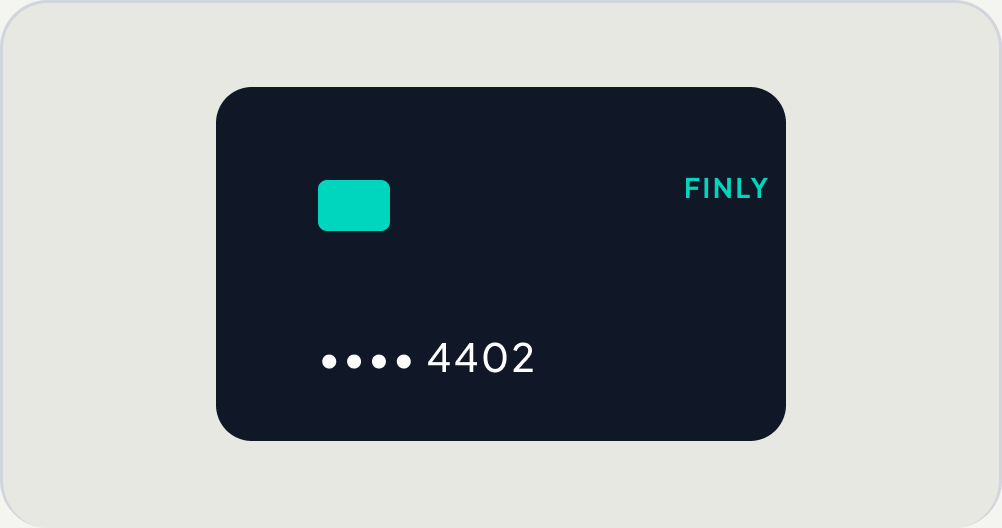
Corporate cards
Issue a card in seconds, set the limit in policy, and see the spend land on the ledger before the receipt is filed.
Corporate cards, bill pay and the close on one ledger —so finance runs on today's numbers instead of last month's.

Cash position · Live
€4.28M
+2.4% this week
Most finance teams close the books three weeks after the month ends.By the time the cash position is signed off it describes a company that no longer exists — a hire already made, a runway already spent, a supplier already paid twice.The number is accurate and useless at the same time.
The product
Issue a card in seconds, set the limit in policy, and see the spend land on the ledger before the receipt is filed.
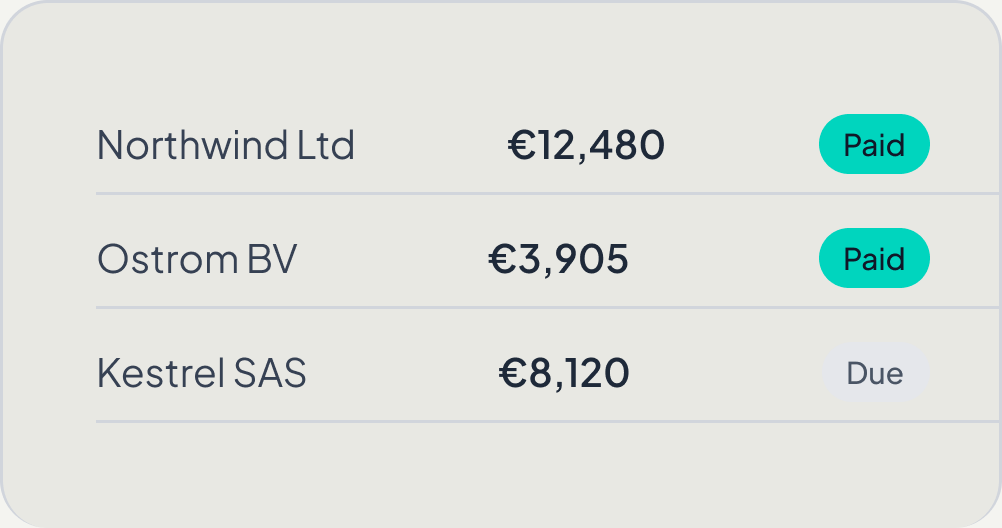
Approve, schedule and pay suppliers in one run. Every payment posts itself, with the invoice attached.
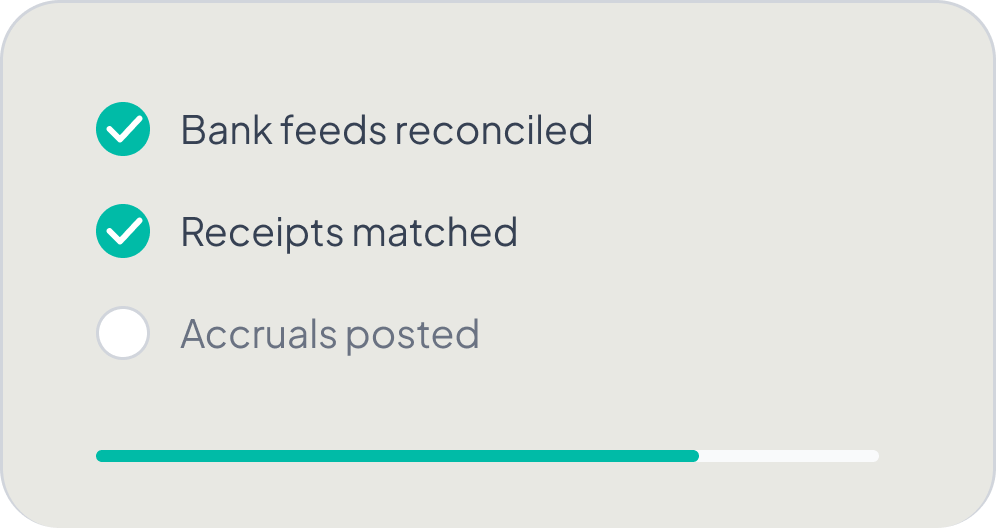
Reconciliation that keeps up. Feeds, receipts and accruals tick off as they clear, not in the last week.
How it works

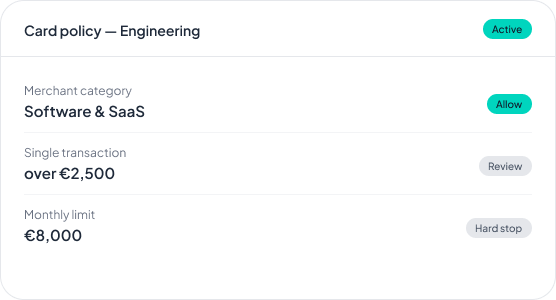
Card limits, merchant categories and approval thresholds live as rules on the card itself.Finance stops reviewing every transaction and starts reviewing only the exceptions.
92% of card spend needs no review
Measured across 2,400 teams in the first quarter after switching.

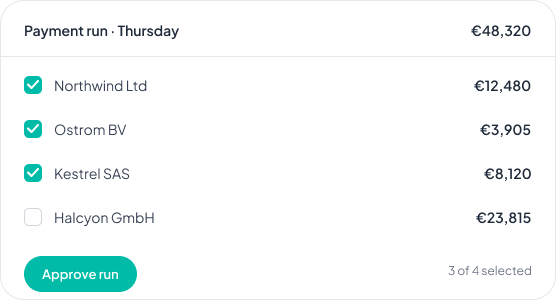
Batch the approvals, schedule the run, and let each payment post itself with the invoice already attached.No CSV export, no re-keying, no second system to reconcile against.
€3.1B moved without a manual entry
Annualised bill pay volume across Finly in 2026.

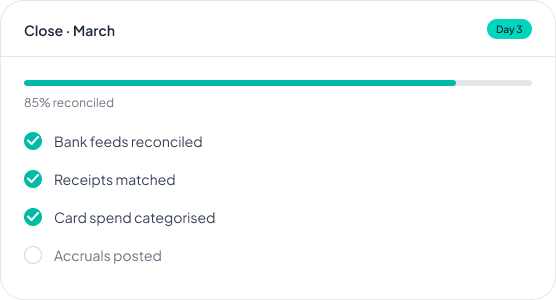
Feeds reconcile continuously and receipts match themselves as they arrive.By the last day of the month there is almost nothing left to do but sign it off.
Day 21 → day 3
Median close for teams in their third month on Finly.

Why Finly
Most tools bolt reporting onto a stack of accounts that never agreed in the first place.Finly starts at the ledger —every card swipe, supplier payment and reconciliation writes to it as it happens.
Integrations
Bank feeds, accounting ledgers, payroll and HR systems sync both ways —so the numbers you see here are the numbers in your books.
Customer stories
Northwind
Close time after one quarter, with no extra headcount on the finance team.
Ostrom
Of receipts captured automatically, without anyone chasing them.
“We used to find out what March cost us in the third week of April. Now the number moves while the month is still happening — which means we can still do something about it. Our first close on Finly took three days. The one before it took twenty-one.”
“The payment run used to be a spreadsheet, a bank portal and three people confirming totals to each other. Now it is one screen and one approval — and the invoice is already attached by the time the payment posts. Nobody re-keys anything.”
Halcyon
Duplicate supplier payments caught in review, before they ever left.
Across Finly
Annualised payment volume moving across Finly bill pay.
On camera
“Twenty-one days to close, then three. Nobody added headcount to get there.”
Priya Raghavan · VP Finance, Northwind
Watch Priya Raghavan's story
“One screen, one approval, and the invoice is already attached when the payment posts.”
Marta Nowak · Financial Controller, Kestrel
Watch Marta Nowak's story
“Receipts stopped being a chase. They arrive matched, or they arrive flagged.”
Bram de Vries · Head of Finance, Ostrom
Watch Bram de Vries's story
“We caught duplicate payments in review that would have gone out the door.”
Tobias Reinhardt · CFO, Halcyon
Watch Tobias Reinhardt's story
Pricing
Move a hundred million or a hundred euro —the bill is the same.
€12/seat/month
For teams up to twenty-five people.
€22/seat/month
Everything in Starter, plus the payables side.
Custom
Everything in Growth, at group scale.

Getting started
Nobody rebuilds a finance stack mid-quarter.So the switch is staged:cards and bank feeds in week one, payables in week two, and the first close runs with your old exports beside it as a check.
From the blog

The close
The four things that have to be true before month-end fits inside a working week.
· 3 min read

Spend
Set it at issue and month-end stops surprising you.
· 2 min read

Payables
Most chains are designed for the exception, not the invoice.
· 2 min read
FAQ
Everything else lives in the docs, or ask us directly —a real person answers.
Get started
Book a 30-minute demo and we'll run your own last month through a sandbox, so you can see the close before you commit to anything.