Northwind sells scheduling software to logistics operators. Two hundred and forty people, nine of them in finance, and a month-end that reliably swallowed the first three weeks of the month after it.
The situation
Every close began the same way. Someone exported card transactions from one bank portal, supplier payments from a second, and reimbursements from a spreadsheet that three people had edit rights to. None of the three agreed on what a cost centre was.
- Two bank portals, one per account, neither of which knew about the other.
- A legacy expense tool that could export a CSV and do nothing else with it.
- A shared spreadsheet that was, in practice, the ledger everyone trusted.
The finance team was not slow. The work was reconciliation — matching a line in one system to a line in another, by hand, for three weeks, and then explaining the difference to a board that had already moved on. By the time March was final it was the third week of April, and nobody could do anything about March any more.
The change
Northwind moved in six weeks, and the order mattered. Cards first, because a card with the policy already on it stops the problem at the point of spend rather than at the end of the month. Then bill pay, so supplier invoices arrived attached to the payment that settled them. The close came last, by which point there was very little left to reconcile.
Nothing was migrated wholesale. The first month ran in parallel — old process and new, side by side — and the two agreed to the cent. That is the only evidence that matters when you are about to switch off the spreadsheet everybody trusts.
The month we ran both processes side by side is the month I stopped arguing about it. The numbers were the same. Ours just arrived three weeks earlier.
Priya Raghavan · VP Finance, Northwind
The outcome
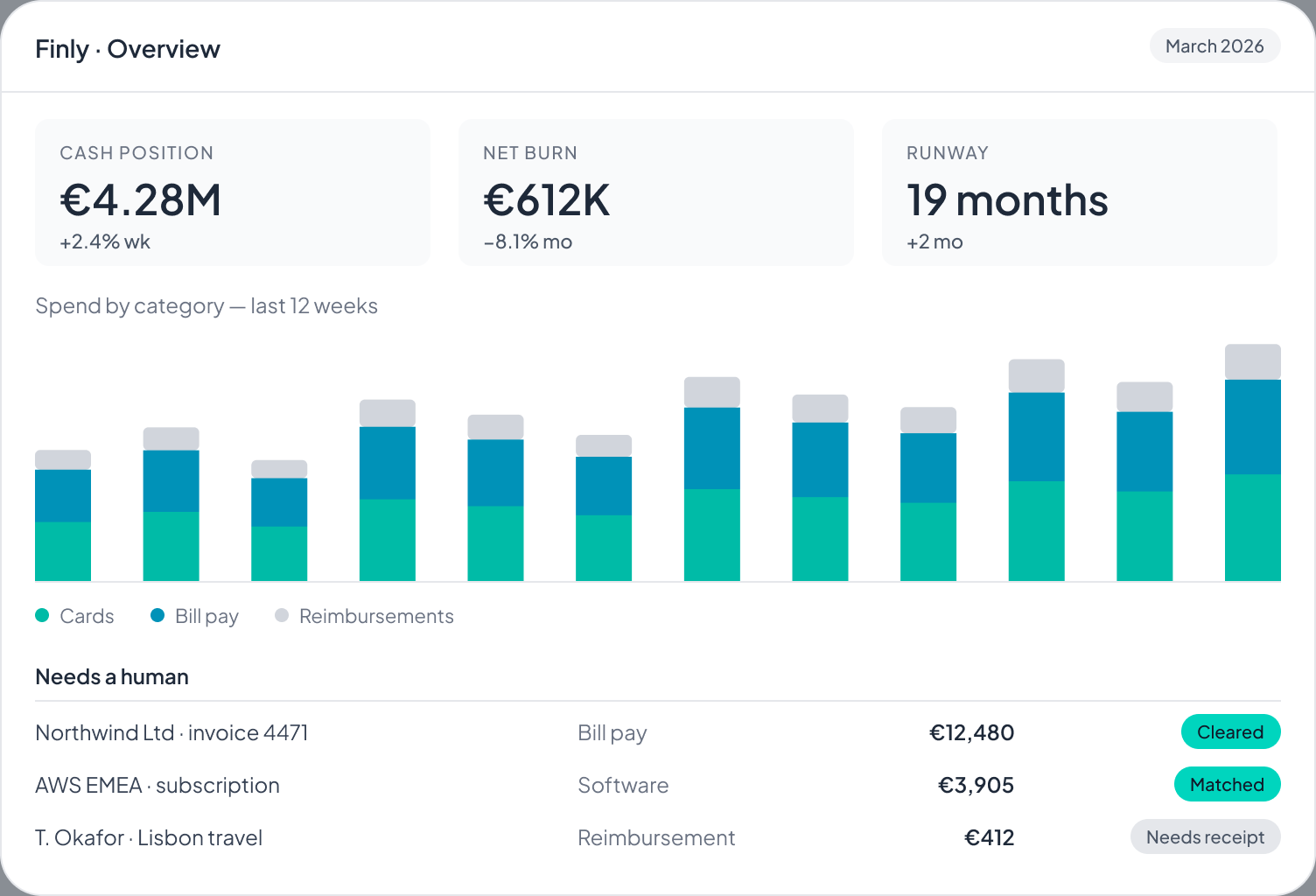
The first close on Finly took three days. The one before it took twenty-one, and the team that ran both was the same nine people — no new hire, no contractor drafted in over year-end.
Approvals account for most of what changed day to day. Eleven hours a week of signing things off became forty minutes, because the only transactions that reach a person now are the ones that broke a rule. Everything else has cleared itself by the time anyone looks.
March closed on a Wednesday. April closed on a Tuesday.