
Xero
Card spend and bills, coded to your own chart.
Accounting
Accounting · Two-way sync · Live since 2024 · About 15 minutes to connect
Finly writes card spend and supplier invoices into Visma with the account, the VAT code and the dimension already set, and holds back anything the period will not take. Each company connects on its own credentials, so a Nordic group keeps its books apart.
What syncs
Both directions, on every sync.Nothing here is a nightly batch —a record that changes at 14:02 is in the ledger before you look at it.
Connected

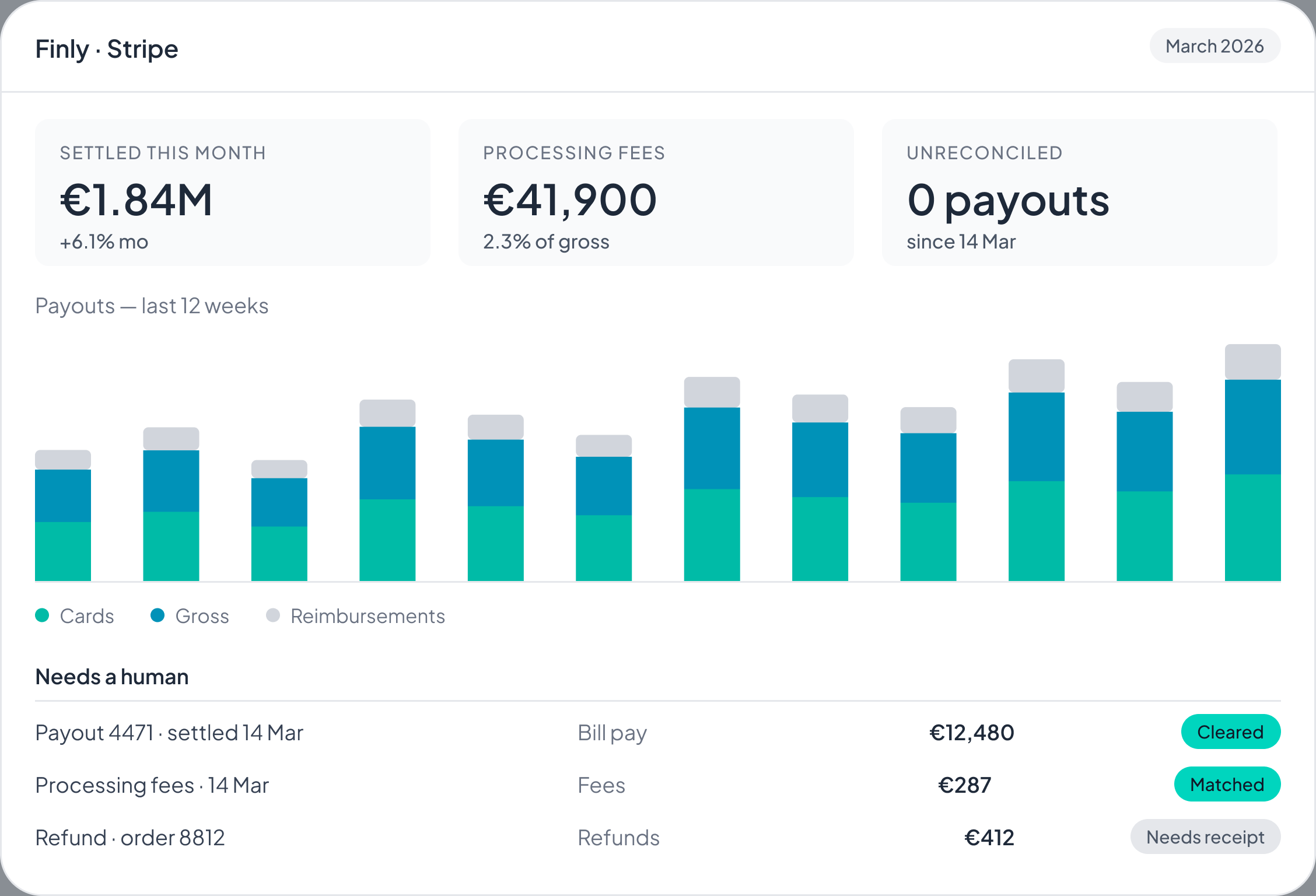
Card spend, bills and reimbursements arrive in Visma with the account, the tax treatment and the cost centre already on them.The bank feed matches them without anyone opening a spreadsheet.
Before you start
You need a Visma account with adviser or administrator rights and a Finly plan that includes the ledger sync, which means Core and above.One Visma organisation maps to one Finly entity, so a group running several sets of books connects each one separately —that separation is what keeps the intercompany lines apart at the close.Nothing is installed, and the credentials never leave Finly.
Two things it deliberately will not do.It will not post into a locked period:if the month is closed in Visma, the entry waits in Finly until you reopen it or roll it forward.It will not touch master data —Finly reads your chart, your dimensions and your suppliers and never writes them back, so a mapping change is always yours to make.
Related
Card spend and bills, coded to your own chart.
Receipts and bills, matched to the register.
Nominal codes and VAT, on every line.
Dutch GL and VAT, without the rework.
Get started
Book a 30-minute demo and we'll run your own last month through a sandbox, so you can see the close before you commit to anything.